Пятнадцать видов, перелёты через горы, голос, слышный за километры, и танцы, которыми они разговаривают друг с другом. Небольшая страница о птицах, в честь которых назван этот домен.
Fifteen species, migrations over mountains, a voice that carries for miles, and dances they use to talk to one another. A small page about the birds this domain is named after.
Кто они такие
What they are
Журавлиные — семейство крупных длинноногих птиц, всего пятнадцать видов: от небольшой красавки до высокого индийского журавля. Встречаются они на пяти континентах — в дикой природе их нет только в Южной Америке и Антарктиде.
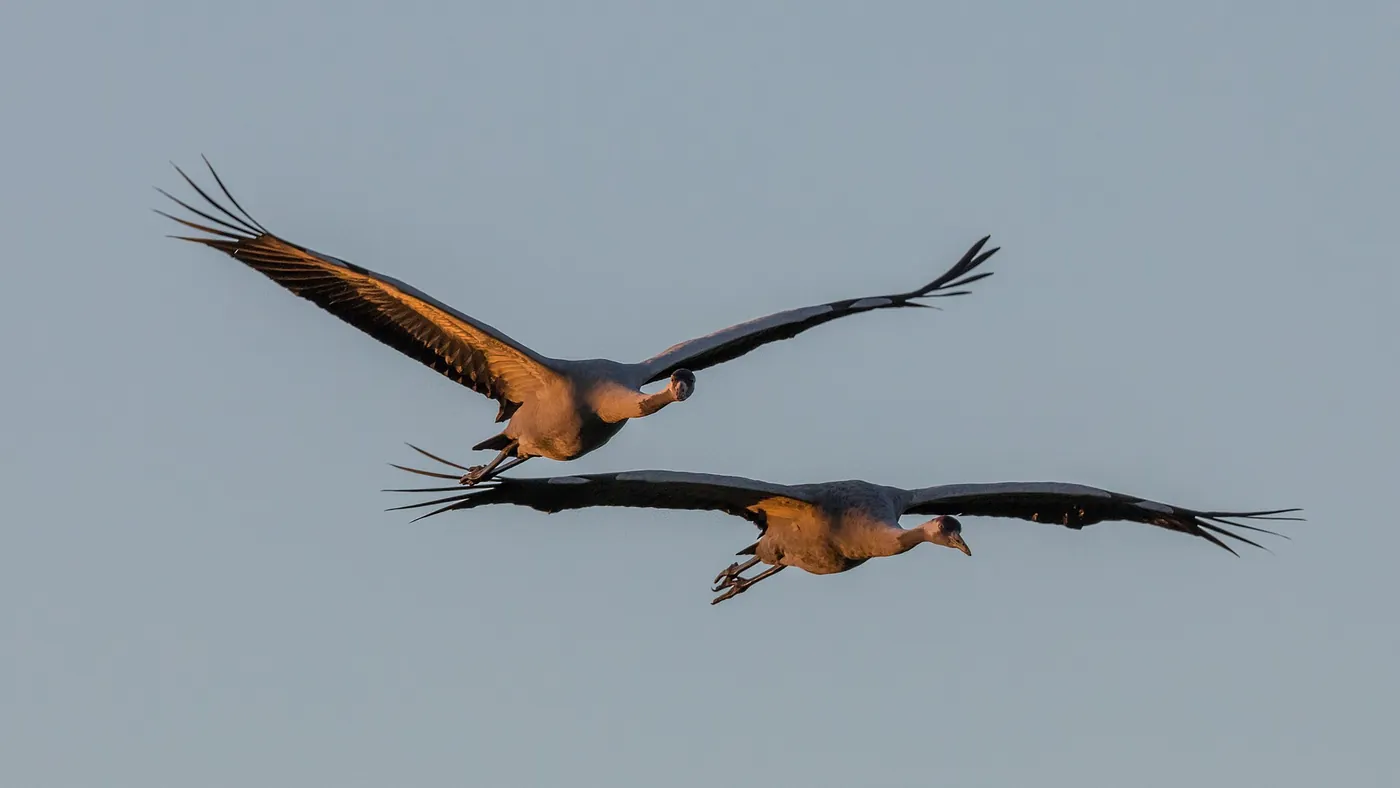
От цапли журавля проще всего отличить в полёте: журавль вытягивает шею вперёд, а ноги оставляет далеко позади хвоста. Цапля в воздухе шею складывает, притягивая голову к плечам. А вот аисты тоже летят с вытянутой шеей — одного этого признака, чтобы отличить журавля от аиста, не хватит.
Ещё одна примета видна вблизи. У многих журавлей на голове есть участок голой красной кожи — «шапочка» или «маска». Искать птицу стоит на болотах, влажных лугах, в степях и на полях: где именно — зависит от вида и времени года.
Cranes are a family of large, long-legged birds — fifteen species in all, from the small demoiselle to the tall sarus crane. They occur on five continents; in the wild they are absent only from South America and Antarctica.
A crane is easiest to tell from a heron in flight: a crane stretches its neck forward, leaving its legs far behind the tail. A heron folds its neck in the air, drawing its head towards its shoulders. Storks, however, also fly with the neck extended — that one sign alone will not separate a crane from a stork.
Another mark shows up close. Many cranes have a patch of bare red skin on the head, a "cap" or "mask". Look for the birds in marshes, wet meadows, grassland and farmland: exactly where depends on the species and the season.
Журавль в полётеCrane in flightШея вытянута вперёд, ноги выступают за хвост.Neck extended, legs trailing beyond the tail.
Цапля в полётеHeron in flightШея обычно сложена, голова ближе к плечам.Neck usually folded, head near the shoulders.
Шея вытянута вперёд, ноги — далеко назад за хвост. По этим двум признакам журавля отличают от цапли.Neck stretched forward, legs trailing far behind the tail. Those two signs are what tell a crane from a heron.
Виды
Species
Шесть видов из пятнадцати — у каждого свои приметы, голос и повадки. Пять живут в Евразии, шестой — африканский, для сравнения.
Six of the fifteen species, each with its own markings, voice and habits. Five live in Eurasia; the sixth is African, for contrast.
Серый журавль
Common crane
Grus grus
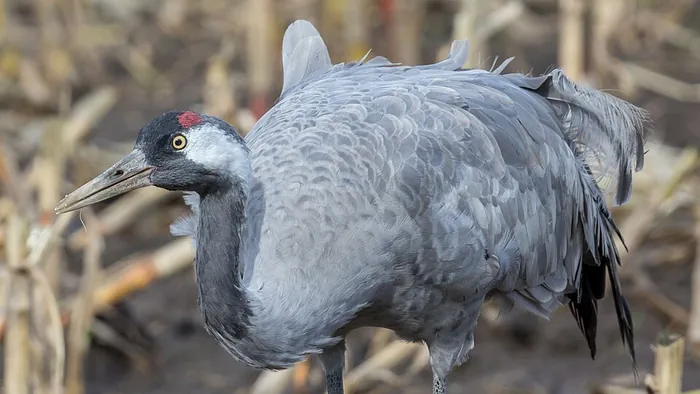
Серое оперение, чёрно-белый рисунок головы, красное пятно на темени. Тот самый журавль, чьи стаи слышно над Европой и половиной России во время перелётов.
Grey plumage, black-and-white head markings, a red crown patch. The crane whose flocks are heard over Europe and half of Russia on migration.
Стерх
Siberian crane
Leucogeranus leucogeranus
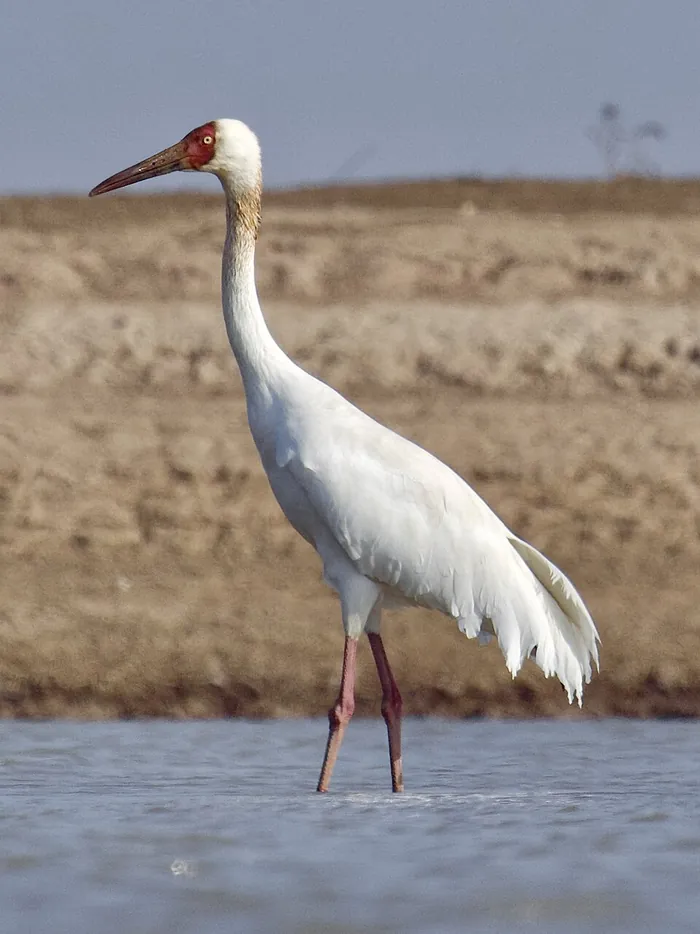
Белоснежный, с красной голой «маской» и чёрными концами крыльев, заметными в полёте. Гнездится в России, а зимует в основном у озера Поянху в Китае.
Snow-white, with a bare red face and black wingtips visible in flight. It breeds in Russia and winters mainly around Lake Poyang in China.
на грани исчезновения · CRcritically endangered · CR
Японский журавль
Red-crowned crane
Grus japonensis
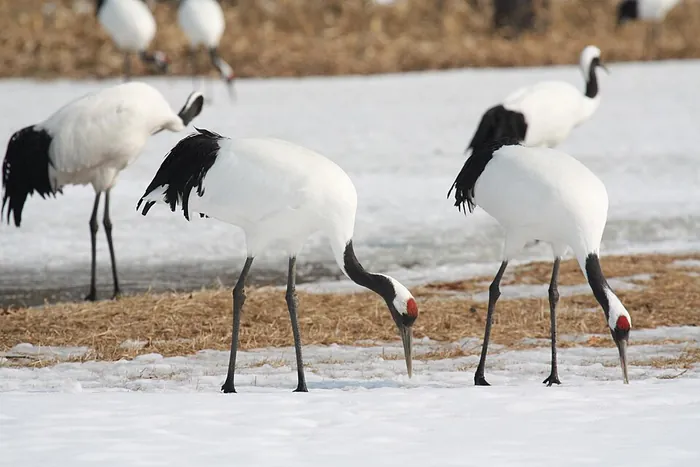
Белое оперение, чёрная шея, красное темя. Живёт в Восточной Азии: часть птиц перелётная, а журавли Хоккайдо остаются на острове круглый год.
White plumage, a black neck, a red crown. It lives in East Asia: some populations migrate, while the cranes of Hokkaido stay on the island year-round.
уязвимый · VUvulnerable · VU
Даурский журавль
White-naped crane
Grus vipio
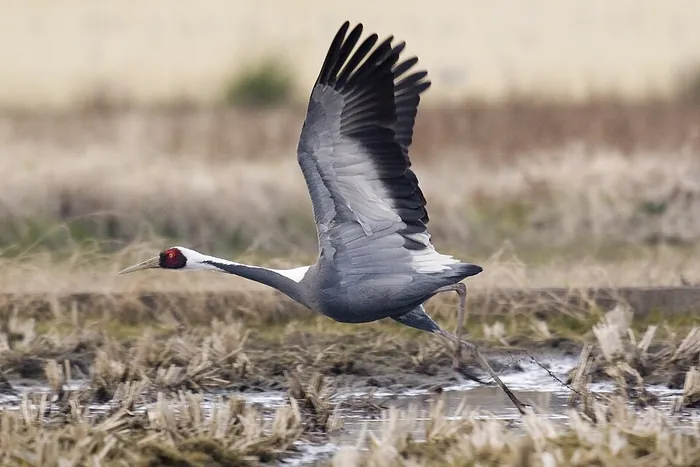
Серый, с белой шеей, красной кожей вокруг глаз и розоватыми ногами. Гнездится в том числе в Забайкалье и Приамурье.
Grey, with a white neck, red facial skin and pinkish legs. Its breeding range includes Transbaikalia and the Amur basin.
уязвимый · VUvulnerable · VU
Красавка
Demoiselle crane
Grus virgo
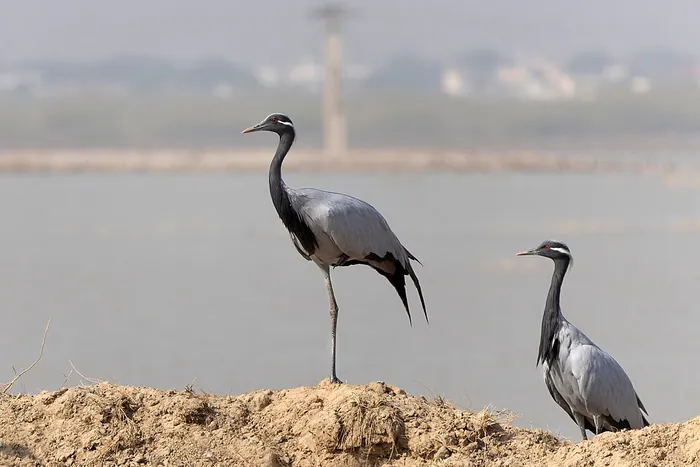
Самый мелкий из журавлей, с длинными белыми перьями за глазами. Часть популяций переваливает по дороге на зимовку через Гималаи.
The smallest of the cranes, with long white plumes behind the eyes. Some populations cross the Himalayas on the way to their wintering grounds.
Восточный венценосный журавль
Grey crowned crane
Balearica regulorum
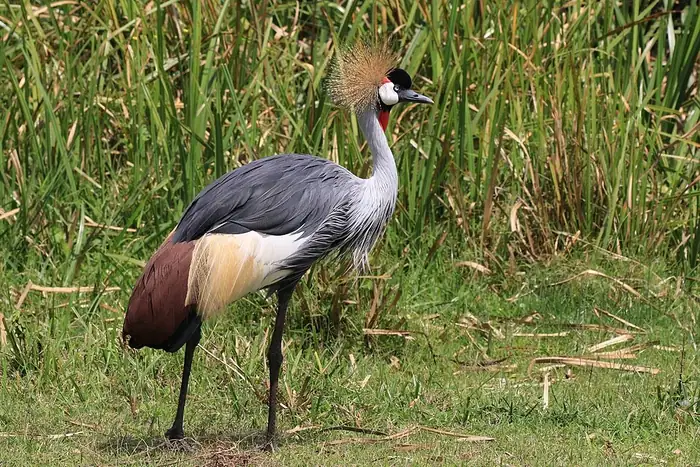
Житель востока и юга Африки с золотой короной из жёстких перьев. Венценосных журавлей два вида, и только они умеют сидеть и ночевать на деревьях.
A bird of eastern and southern Africa with a golden crown of stiff feathers. There are two crowned crane species, and only they can perch and roost in trees.
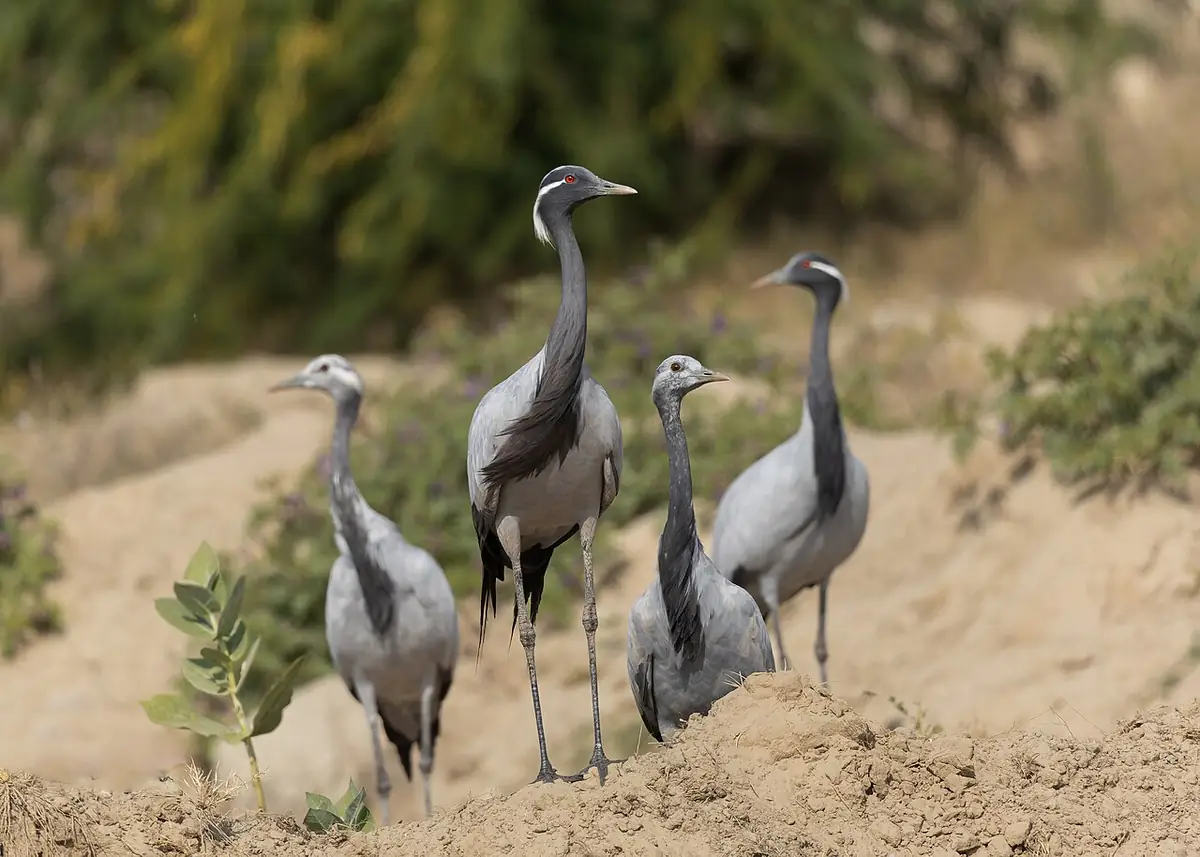
Красавка весит всего несколько килограммов, но часть её популяций переваливает Гималаи по дороге из мест гнездования в Азии на зимовку в Индию. Это один из самых впечатляющих маршрутов, какие есть у журавлей.
Высокогорный перелёт идёт в холодном разреженном воздухе. Но этим путём летят не все красавки: маршрут зависит от того, где птицы гнездятся и где зимуют. Весной дорога ведёт их обратно.
A demoiselle weighs only a few kilograms, yet some of its populations cross the Himalayas between their Asian breeding grounds and wintering areas in India. It is one of the most remarkable routes any crane takes.
The mountain crossing happens in cold, thin air. But not every demoiselle flies that way: the route depends on where the birds breed and where they winter. In spring the road leads them back.
Красавки на зимовке в Раджастхане, Индия.Demoiselle cranes wintering in Rajasthan, India.
За летящей птицей остаётся след из воздушных вихрей. Сразу за крылом воздух идёт вниз — лететь там тяжело. Зато с боков от следа он поднимается вверх, и тот, кто летит позади и чуть сбоку, может на этот восходящий поток опереться.
Так и складывается знакомый клин. Подробно это измерили не на журавлях, а на лесных ибисах: птицы с датчиками выбирали положение относительно соседа и согласовывали взмахи крыльев. Опыт объясняет, в чём польза строя, но общего числа не даёт — приписывать журавлям определённый процент экономии на его основании нельзя.
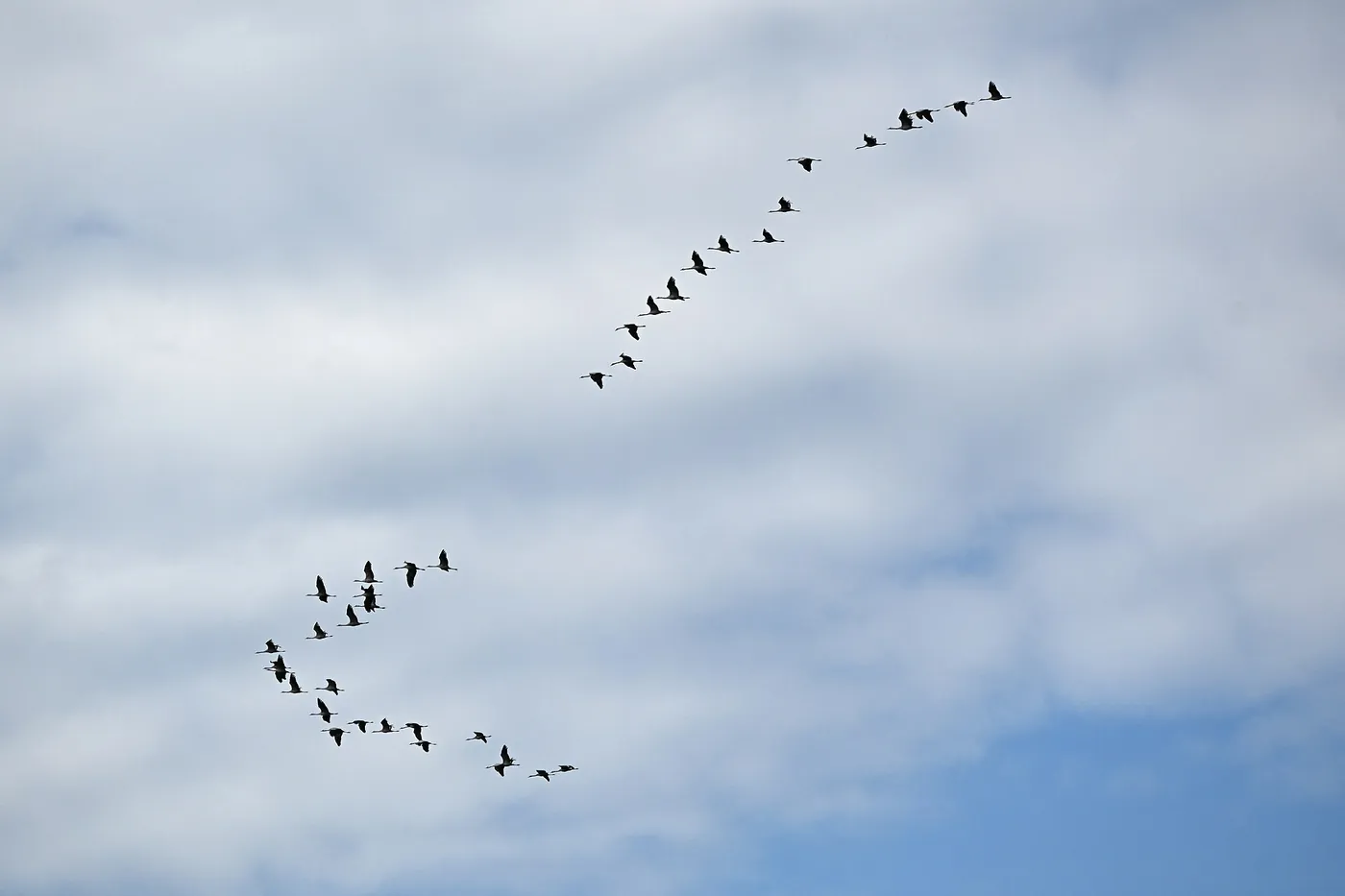
Живой клин не похож на чертёж: расстояния между птицами и их места в стае всё время меняются.
A flying bird leaves a wake of swirling air. Right behind the wing the air sinks — hard flying there. To the sides of the wake it rises instead, and a bird flying behind and slightly to one side can lean on that rising current.
That is how the familiar V comes about. The detailed measurements were made not on cranes but on northern bald ibises: birds carrying sensors chose their position relative to a neighbour and coordinated their wingbeats. The experiment explains why a formation helps, but it yields no universal figure, and a specific percentage cannot be credited to cranes on that basis.
A living formation looks nothing like a diagram: the distances between birds and their places in the flock keep shifting.
Два клина в небе. Положение птиц и форма стаи в полёте всё время меняются.Two V formations. The positions of the birds and the shape of the flock keep changing in flight.
Измерения полёта строем — Nature, 2014, опыт на лесных ибисах.Formation-flight measurements — Nature, 2014, a study on northern bald ibises.
Голос
The voice
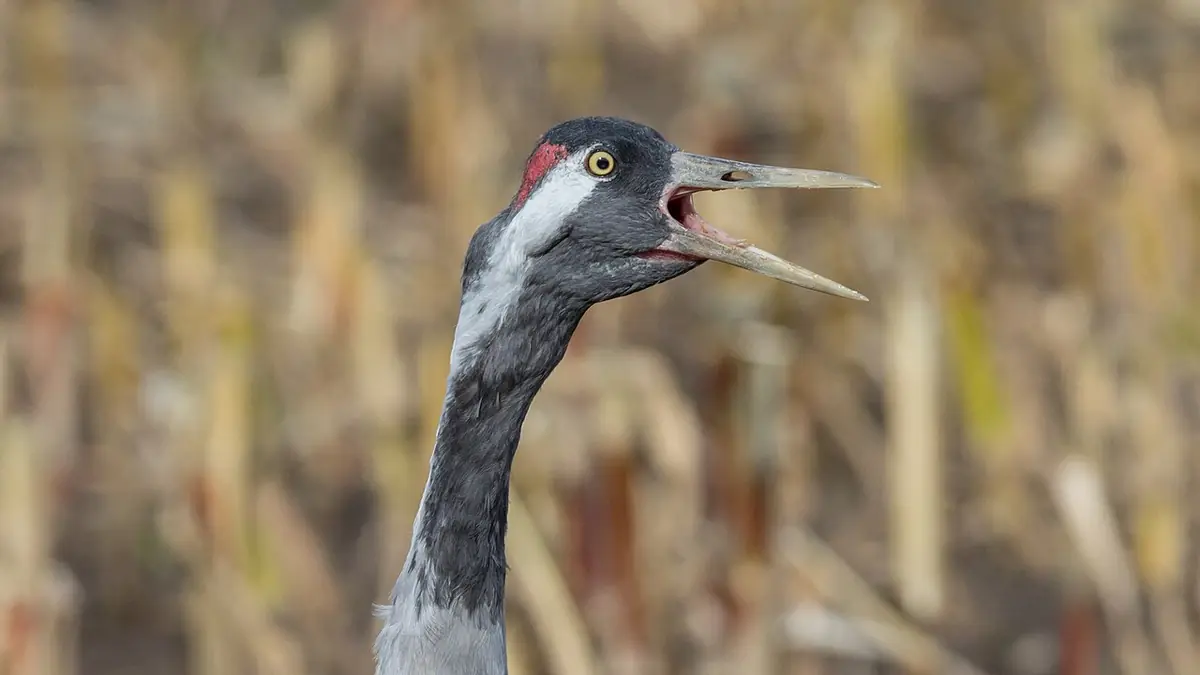
Журавлей обычно слышно раньше, чем видно: крик разносится далеко и помогает птицам держать связь. У многих видов трахея удлинена и укладывается петлями в грудине — устройство голосового тракта и определяет, как звучит птица.
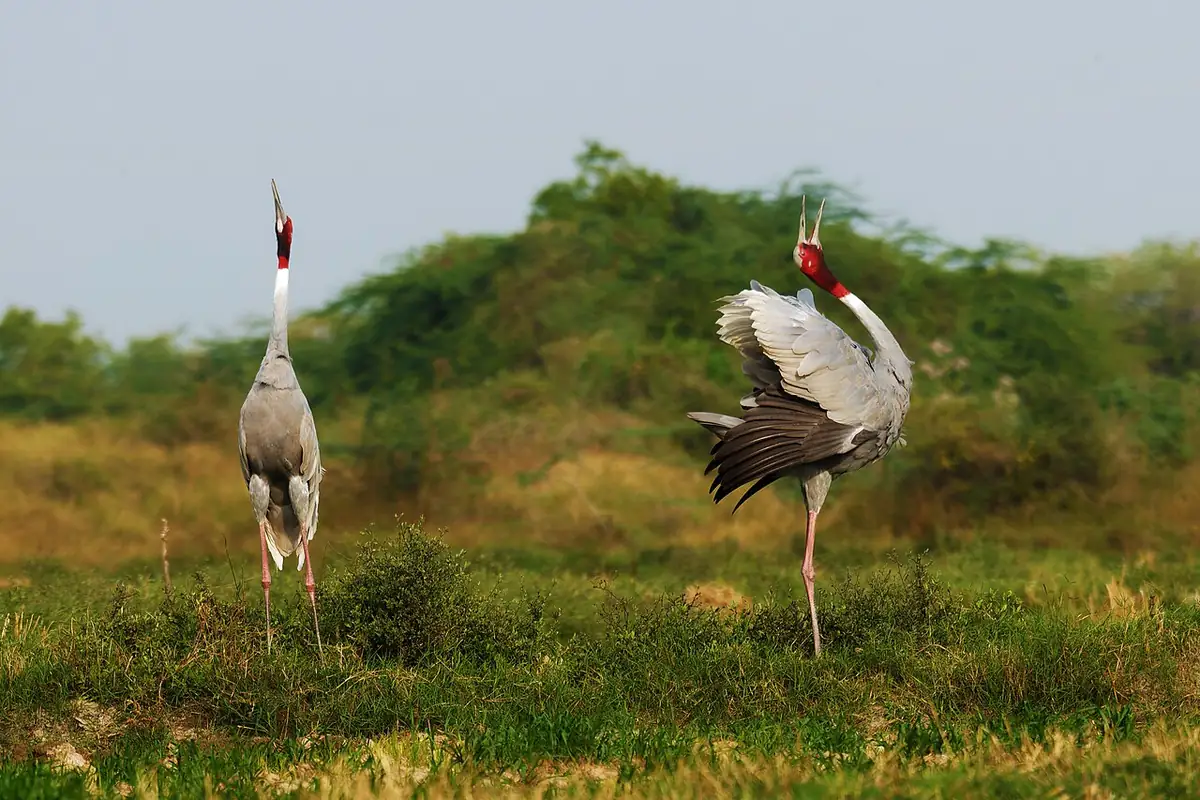
У пары есть особый совместный крик — согласованный дуэт. Он держит связь между партнёрами и объявляет соседям, что участок занят. Рисунок дуэта у разных видов свой: кто начинает и сколько раз отзывается, зависит от вида.
Cranes are usually heard before they are seen: the call carries far and helps the birds keep in touch. In many species the windpipe is elongated and coils inside the breastbone — the shape of the vocal tract is what gives the bird its sound.
A pair has a call of its own, a coordinated duet. It keeps the bond between the partners and tells the neighbours the ground is taken. The pattern differs between species: who starts, and how many times each answers, depends on the species.
Кричащий серый журавль. Голос помогает птицам держать связь друг с другом.A calling common crane. The voice helps the birds keep in touch with one another.
Запись серого журавля — двадцать семь секунд. Звук включится только по нажатию.
A common crane, twenty-seven seconds. Nothing loads until you press play.
Прыжок, поклон, расправленные крылья — журавлиный танец ни с чем не спутать. Птицы подбрасывают клювом пучки травы и мелкие предметы. Танцуют не только сложившиеся пары: то же поведение бывает и у молодых птиц.
Танец связан с ухаживанием и с поддержанием связи между партнёрами, но встречается и вне брачного сезона. Совместный крик для пары важен не меньше, однако крик и танец — разные вещи.
A leap, a bow, wings thrown open — a crane dance is unmistakable. The birds toss up tufts of grass and small objects with their bills. It is not only established pairs that dance: young birds do the same.
Dancing has a part in courtship and in keeping the bond between partners, but it also happens outside the breeding season. The unison call matters to a pair just as much, yet calling and dancing are separate things.
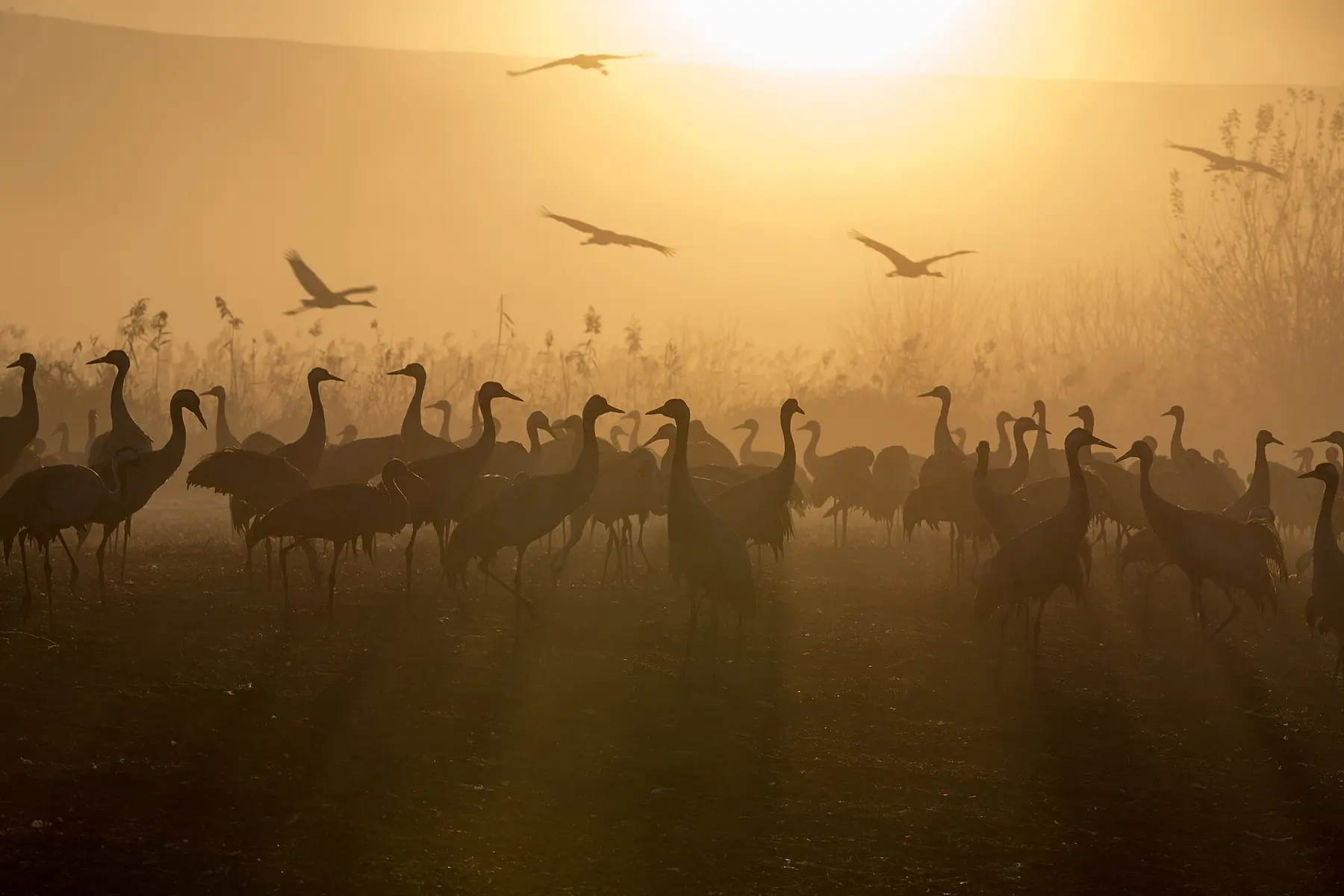
Пара индийских журавлей во время совместного крика — это не танец, а отдельная демонстрация.A pair of sarus cranes performing a unison call — not a dance, but a display of its own.Осеннее скопление серых журавлей: поле, на котором кормятся сотни птиц, и те, кто то садится, то поднимается снова. Шесть секунд, без звука.An autumn staging ground: a field where hundreds of common cranes feed, with birds landing and taking off again. Six seconds, no sound.